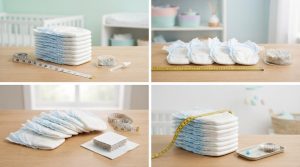
Preemie diapers are a small but highly differentiated category in baby care. Unlike standard newborn diapers, which may be too large for premature babies, preemie diapers are designed for tiny waists, lighter body weights, delicate skin, and more careful fit requirements. For parents and caregivers, the right diaper helps reduce gaps, leakage, bulk, and discomfort. For B2B buyers, distributors, and private label brands, preemie diapers create an opportunity to serve a specialized segment that is not fully covered by ordinary newborn diaper ranges.
WEHOO Hygiene’s Baby Care range already includes Preemie Diapers and a broader baby diaper size system from PB and NB through XXXL. This makes preemie diapers a valuable topic for both information traffic and B2B sourcing traffic. In this guide, we explain the key differences between diapers for premature babies, size 0 diapers, PB size diapers, and newborn diapers, then outline material, fit, and OEM sourcing considerations for wholesale buyers.

What Are Preemie Diapers?
Preemie diapers are diapers made for premature or very low birth weight babies. In retail and OEM sourcing, they may also be described as diapers for premature babies, size 0 diapers, PB size diapers, premature baby diapers, or tiny baby diapers. The exact sizing terms can vary by country and brand, so wholesale buyers should always confirm the intended weight range, waist range, length, front and back width, and fit design before placing an order.
The main purpose of a preemie diaper is not only to be smaller. A good preemie diaper should reduce unnecessary bulk, fit securely around a tiny waist and legs, absorb efficiently without feeling stiff, and protect sensitive skin. Because premature babies may need more careful handling, the diaper should be easy to position and change. This is why simply shrinking a standard newborn diaper is usually not enough for a reliable preemie diaper program.
Why Standard Newborn Diapers May Be Too Large
Newborn diapers are typically designed for babies at or near full-term birth weight. Premature babies can be much smaller, and a diaper that is too large may create gaps around the legs, sit too high on the abdomen, or bunch uncomfortably between the legs. Oversized diapers can also make it harder for caregivers to check fit and may increase leakage risk because the absorbent core is not positioned correctly.
For wholesale buyers, this creates an important product positioning point. A brand that offers only NB, S, M, L, XL, XXL, and XXXL may miss the earliest care stage. Adding PB size diapers or size 0 diapers allows a distributor to present a more complete baby care size ladder. It also supports hospitals, maternity channels, online baby stores, and specialty retailers that want practical options for smaller babies.
Preemie Diaper Size Guide: PB, Size 0, NB and Beyond
There is no single global naming rule for preemie diaper sizes. Some markets use “preemie,” some use “premature,” some use “PB,” and others use “size 0.” For sourcing, buyers should focus less on the name and more on the measurable specification. The table below shows a practical way to compare the size ladder.
| Size Term | Typical Positioning | Key Fit Priority | Best Channel |
|---|---|---|---|
| PB / Preemie | For premature or very small babies | Low bulk, tiny waist fit, gentle leg opening | Hospital, maternity, specialty baby care |
| Size 0 | Often similar to preemie sizing, depending on market | Smallest practical retail or institutional diaper size | Retail, online baby stores, pharmacy |
| NB / Newborn | For standard newborn stage | Secure fit for full-term newborns | Mass retail, baby care distributors |
| S to XXXL | Growth stage sizes | Absorbency, movement comfort, waist and leg elasticity | Complete baby diaper product ranges |
When building a private label range, PB or size 0 diapers should be clearly placed before NB in the size chart. This helps parents and buyers understand that preemie diapers are not the same as newborn diapers. WEHOO’s Preemie Diapers Size 0 Supplier product page is an important internal landing page for this topic because it connects the educational content to a real OEM sourcing offer.

Key Materials for Diapers for Premature Babies
Soft Nonwoven Top Sheet
The top sheet is the layer closest to the baby’s skin. For preemie diapers, softness is especially important because premature babies may have more delicate skin. Buyers should compare hand feel, liquid acquisition speed, dryness after absorption, and whether the material feels smooth rather than scratchy. A premium preemie diaper should not feel like a cut-down version of an economy diaper.
Absorbent Core with Fluff Pulp and SAP
The absorbent core must balance capacity and thinness. Since preemie diapers are very small, too much core thickness can create bulk, but too little absorbency can increase leakage and changes. Buyers should ask the preemie diaper manufacturer about core composition, SAP distribution, absorption capacity, rewet performance, and core stability after wetting. The goal is a diaper that absorbs reliably while remaining comfortable and flexible.
Breathable Backsheet
A breathable, cloth-like backsheet can improve comfort and product perception. In many private label markets, a soft outer layer supports a more premium positioning. Buyers should compare PE film, breathable film, and cloth-like laminated backsheets depending on price target and market expectations. For high-end premature baby diapers wholesale programs, the backsheet is often one of the details that makes the product feel more advanced.
Elastic Leg Cuffs and Gentle Waist Fit
Leg cuffs and waist details are critical because fit gaps are one of the main reasons newborn diapers may fail on premature babies. The diaper should sit securely without excessive pressure. Buyers should test leg opening size, cuff height, tape position, waist stretch, and fastening strength. For very small diapers, a few millimeters can affect real-world fit.
How Preemie Diapers Support Hospitals and Specialty Baby Care
Preemie diapers can serve hospitals, maternity care channels, neonatal-related retail programs, online specialty stores, and distributors building a complete baby care portfolio. Institutional buyers usually care about fit consistency, packaging practicality, safety documentation, and dependable supply. Retail buyers may also focus on shelf appeal, pack count, unit price, and educational product claims.
When writing product copy or packaging claims, brands should avoid making medical promises unless those claims have been reviewed by qualified professionals in the target market. For general education, buyers can refer to non-commercial public health resources such as the World Health Organization’s preterm birth overview. Parents and caregivers should always follow guidance from healthcare providers for premature baby care.
OEM Sourcing Checklist for Preemie Diaper Buyers
- Confirm the target size name: preemie, PB, size 0, premature, or tiny baby.
- Define the intended baby weight range and request the full size specification.
- Test softness, dryness, absorbency, leakage protection, and core stability.
- Check waist tape position, leg cuff fit, and overall diaper bulk.
- Review available packaging formats for hospital, retail, e-commerce, or private label channels.
- Ask for quality control documentation, sample approval process, and inspection standards.
- Confirm MOQ, lead time, artwork requirements, carton packing, and container loading.
- Make sure the supplier can support the full size ladder from PB and NB to larger sizes if needed.
This checklist is especially useful when comparing suppliers who claim to produce preemie diapers but mainly manufacture standard baby diaper sizes. A true preemie diaper manufacturer should understand why smaller sizing, softer materials, and detailed fit control matter. If you are comparing broader supplier capabilities, WEHOO’s article A B2B Guide: How to Choose the Right Material for Diapers can help you evaluate materials across diaper categories.

Private Label and Wholesale Positioning
For private label buyers, preemie diapers can strengthen brand credibility because they show that the brand understands different baby care stages. A complete range from PB to XXXL communicates thoughtful product planning. It also helps retailers and distributors create better shelf navigation: preemie or size 0 for the smallest babies, NB for newborns, then larger sizes for growth stages.
Packaging should explain the size clearly without confusing parents. Common pack elements include size label, weight range, quantity, softness claims, absorbency positioning, and simple usage guidance. Wholesale buyers should also consider carton marks, barcode standards, language requirements, and regulatory review for each destination market. For general baby care portfolio context, link the product story back to WEHOO’s Baby Care solutions and related articles such as New Arrivals | Preemie Diaper: A Gentle Touch for Tiny Treasures.
Common Questions Wholesale Buyers Ask
Are preemie diapers the same as size 0 diapers?
They can be similar, but the naming depends on the brand and market. Some brands use size 0 to describe the smallest diaper size, while others use PB or preemie. Always confirm the weight range and physical dimensions before ordering.
Can newborn diapers be used for premature babies?
Sometimes they may be used, but they can be too large for very small babies. A diaper that is too big may create gaps, bulk, and leakage. Caregivers should follow medical guidance, while buyers should offer correctly positioned size options.
What should a buyer ask a preemie diaper manufacturer first?
Start with size chart, material structure, absorbency data, sample availability, MOQ, packaging options, lead time, and quality control process. If the supplier cannot clearly explain the PB or size 0 specification, compare carefully before committing to bulk production.
External Compliance and Safety References
Preemie diaper buyers should keep product claims practical and compliant. For U.S.-related regulatory orientation, buyers may review FDA device classification information and then confirm details with qualified regulatory professionals. Requirements can differ by country, product claim, and sales channel.
Final Thoughts
Preemie diapers are a meaningful niche within baby care because they solve a real fit problem that standard newborn diapers may not address. For wholesale buyers, the best program combines clear size positioning, soft materials, dependable absorbency, gentle fit, private label flexibility, and an OEM partner that understands the full baby diaper size ladder. By building content around preemie diapers, diapers for premature babies, size 0 diapers, PB size diapers, preemie diaper manufacturer, and premature baby diapers wholesale, a B2B hygiene website can attract both informational readers and serious sourcing inquiries.
To explore sourcing options, start with WEHOO’s Preemie Diapers category, review the Preemie Diapers Size 0 Supplier product page, and connect it with the broader Baby Care portfolio for a complete PB-to-XXXL product strategy.